


Bridging Visa E (Class WE) is one of several bridging visas which allows an unlawful non-citizen to remain lawful in Australia when they do not hold a substantive visa under certain circumstances. An unlawful non-citizen is a person who continues to stay in Australia without a valid visa for reasons such as visa expiry, visa cancellation, visa refusal or such other circumstances. There are two subclasses of Bridging Visa E, Bridging E (General) (Subclass 050) and Bridging (Protection Visa Applicant) (Subclass 051). This blog discusses Subclass 050 visa hereinafter referred to as ‘BVE’. BVE is a temporary visa which allows an unlawful non-citizen to remain in Australia temporarily for a specific purpose for following circumstances. Circumstances for BVE Application You voluntarily present yourself as an unlawful non-citizen to the Department. You are located by compliance action team as an unlawful non-citizen. Your visa was refused, including any family members. Your visa was cancelled, including any family members. Your visa refusal or cancellation decision was affirmed by a review authority. Your protection visa was refused previously. Your student visa was cancelled automatically, including any family members. You are in criminal detention. You had your citizenship application refused, including any family members. You are an unauthorised maritime arrival or irregular air arrivals released into the community. The situation has become increasingly alarming in context of ongoing Coronavirus (Covid-19) pandemic which has brought the world to a standstill and directly affecting many temporary visa holders as there are many cases of visa expiry and visa cancellation due to closing down of borders and severe travel restrictions worldwide. The next question is, who is eligible to apply for this visa? Eligible Non-citizens for BVE Applications If you have been immigration cleared; or If you bypassed or were refused immigration clearance on or after 1 September 1994 and have not been granted a substantive visa or entry permit since and have not come to notice within 45 days of entering Australia; or If you last held a student visa that was cancelled and have been refused immigration clearance. Conditions to Apply for BVE You must be in Australia but not in immigration clearance. If you are in immigration detention, the detention review officer must be informed of the application. You have previously NOT held a Bridging Visa E that was cancelled for engaging in criminal conduct or breach of signed code of behaviour imposed by public interest criterion. You have previously NOT held a visa that has been cancelled on a ground of criminal conduct. Please know, there is no visa application charge by the Department for lodging a BVE application. If you continue staying in Australia without a valid substantive visa or a bridging visa, you may face some serious consequences including detention and removal from Australia. Thus, it is advisable to apply for BVE as soon as your visa is expired, or is refused or cancelled by the Department, or you are in any of the above mentioned situations, to maintain your lawful status in Australia. If you do not do so, your status will be considered as unlawful which may affect your ability to be granted a future visa. Lastly, you may be able lodge a valid application for a substantive visa, if you are eligible, at the same time and on the same form as your BVE application. You can also combine your BVE application with applications of your dependents who are members of the family unit. If you are stuck in any such situation or are facing issues of visa expiry, visa cancellation, visa refusal or any other migration related matter, call us on (02) 4626 100 to discuss your situation or Contact Us so that one of our Registered Migration Agents can help you with your BVE application.

Under normal circumstances, you must lodge an application for a Transit Visa (Subclass 771) to allow you to transit through Australia and stay for up to 72 hours before catching your flight. However, you need not apply for 771 visa if you already hold a valid visa in Australia or are eligible to Transit Without a Visa (TWOV). Eligibility for Subclass 771 Visa You must leave Australia within 72 hours. You must meet health and character requirements You must have adequate health insurance. You must be outside Australia at the time of visa application and at the time of decision on your application . But nothing is normal about this COVID-19 situation! Due to travel restrictions, both international and domestic, in response to Covid-19 the Government requires that all passengers transiting through Australia must also seek a travel restriction exemption from the Commissioner of the ABF (Australian Border Force) to be allowed to do so. The application for such exemption must be made online through the COVID-19 (Novel Coronavirus) enquiry form on the Department’s website. You must fill the form with required details such as purpose of transiting through Australia, intended travel date, arrival and departure flight details, list of countries visited in last 14 days, your personal information and passport details. If you do not seek an exemption, you will not be allowed to transit through Australia. Further, if you are unable to depart from Australia on the same day (8 hours) as your arrival, irrespective of the Commissioner’s exemption, you may have to undergo isolation in the designated facilities of respective States or Territories to meet their isolation requirements. It is then the prerogative of respective States or Territories to consider granting exemption from their mandatory isolation requirements. Exemption for New Zealanders and Pacific Islanders New Zealanders and Pacific Islanders (citizen of a Pacific Island Forum country, Timor Leste citizen or resident of New Caledonia or French Polynesia) transiting through Australia DO NOT need to apply for a transit exemption if: Your transit though Australia is on your way to or from New Zealand or a Pacific Island Forum Country, and Your booked flight is departing from Australia within 72 hours of your arrival, and Your outbound connecting flight is departing from the same state or territory of Australia as your arrival flight. If your connecting flight requires you to be in Australia for more than 72 hours of your arrival, you must also apply for an exemption to the ABF Commissioner. This exemption application must be made online through the Department’s website. Thus, it is in your best interest to transit through Australia on the same day, holding a valid visa and a travel restriction exemption, wherever required. Also know that there is no visa application charge for lodging a 771 visa application. If you are seeking assistance to transit through Australia or need help in applying for travel restriction exemption, Contact Us today or call us on (02) 4626 100 to speak to one of our Registered Migration Agents who can help you with your situation.
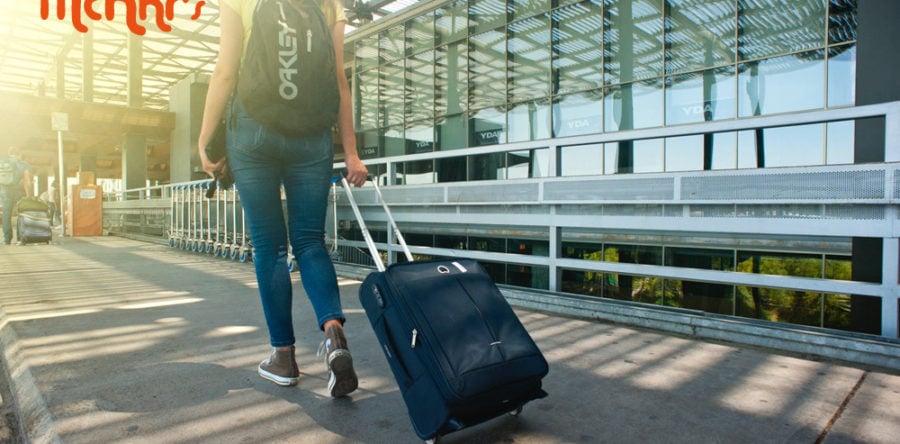
Your client is in immigration detention, and they have no more options left to legally stay in Australia. How can you assist them? The best way to achieve optimal results for your client would be to make an application for a Bridging Visa E on departure grounds [Schedule 2 Clause 050.212(2)] If your client can obtain a Bridging Visa and is therefore able to leave the country as a lawful non-citizen they will not have to be removed. As well, this means they will have a better chance of re-entering Australia, provided of course that they can make a valid visa application. However if they can’t obtain a Bridging Visa because their visa has been cancelled or refused they will have to remain in detention until they are removed. What if your client is unlawful, but has not yet been detected? You will need to counsel them to attend an immigration office as soon as possible, with their valid passport, and a current airline ticket, to make an application for a Bridging Visa on departure grounds. It is important that you ensure your client understands that if they go to the airport without a valid visa they may be questioned and detained by border officials. In the worst case scenario they risk being removed involuntarily from the country as an unlawful non-citizen. Under section 210 of the Migration Act any person, except those on a criminal justice visa, who is removed or deported must repay all the costs of their removal or deportation. An unlawful non-citizen who requests in writing to be removed, and the request is approved, is considered to be a voluntary removal. If they do not require a security escort, or medical, or welfare escorts then they can be removed unescorted. On the other hand, a non-citizen who has not made a written request to be removed, is known as an involuntary removal. If they pose a high security risk, or require medical, or other escorts, then their removal must be escorted. All unlawful non-citizens are required to be removed as soon as reasonably practicable. An officer of the Department also has the discretion to remove the spouse or defacto partner of a non-citizen who has been removed from Australia. Assisted Voluntary Returns (AVR) services are available to assist Bridging Visa E visa holders who may need assistance and support to leave Australia. If you think your visa has expired, or your visa is about to expire, or you are not sure of your immigration status, don’t put your future or your family at risk because you haven’t got the facts. At Migration Centre of Australia we are experienced in handling highly complex and sensitive matters, and we have some of the best immigration agents in Sydney. Call our Registered Migration Agents 02 46261002, or email admin@mckkrs.com.au.

What, then, are the eligibility requirements for the adoption visa? First, the adoption has to be in the best interests of the child. Second, there has to be an eligible sponsor (AUS Citizen/PR) – this is the adoptive parent/s. Third, the child must be under at 18 at the time the decision is made on the visa application. And of course, the primary factor determining whether or not the visa will be granted, the adoption itself. There are 3 principal methods of adoption: Have been or be in the process of being adopted through an intercountry adoption or arrangement with the involvement of an Australian state or territory central authority; OR Have been or be in the process of being adopted through an intercountry adoption between 2 countries, other than Australia, that are parties to the Hague Convention on the Protection of Children and Cooperation in Respect of Intercountry Adoption , OR Have been adopted through an adoption that did not involve an Australian state or territory central authority. This is also called an expatriate adoption. The adoptor must be an Australian citizen, an eligible New Zealand citizen or the holder of an Australian permanent visa. And they must have been living outside Australia for more than 12 months before lodging the visa application . If one of the above is satisfied, then you qualify for this visa subclass. Seems straightforward right? Actually, not quite. As it happens, there is another question that is borne out of these complex definitions of adoption. Funny thing is that it involves adoption, but not this subclass of visa: What if I was adopted by someone who was not an Australian Resident at the time, but became one at a later date? Thankfully, here at the Migration Centre of Australia, we have knowledgeable migration agents that know the answer. Simply put, if you fulfil that criteria and your adoptive parent became an Australian Permanent Resident after the adoption, then this visa subclass does not apply to you. You will need to apply for the child visa (subclass 101). The other eligibility requirements are similar to those of the subclass 101 visa. If you feel you qualify for either subclass, contact the Migration Centre of Australia now and our team of registered migration agents will help you migrate to Australia and join your family. Our expertise will be applied to ensure you get a successful outcome and are granted the visa. So call us at 0246261002 or email at admin@mckkrs.com.au

Work and Holiday visa holders can now work with the same employer for twelve months if they are assisting with bushfire recovery efforts. Any paid or volunteer disaster recovery work in declared areas will count towards the ‘specified work’ needed to apply for a second or third year 462 visa. There is an option to stay for a third year if you choose to work in a specified regional area. Presently the following countries are designated as specified foreign countries. (a) Argentina (b) Austria (c) Chile (d) China, People’s Republic of (e) Czech Republic (f) Ecuador (g) Greece (h) Hungary (i) Indonesia (j) Israel (k) Luxembourg (l) Malaysia (m) Peru (n) Poland (o) Portugal (p) San Marino (q) Singapore (r) Slovak Republic (s) Slovenia (t) Spain (u) Thailand (v) Turkey (w) United States of America (x) Uruguay (y) Vietnam. Recent changes to the legislation have increased the number of places available for applicants from Spain 1500 up to 3400 Peru 100 up to 1500 Chile 2000 up to 3400 Argentina from 1500 up to 2450 Malaysia 100 up to 1100 Singapore 500 up to 2500 Portugal 200 up to 500. As well Greece 500 and Ecuador 100 have been added to the program. India Brazil Mexico Philippines Switzerland Fiji Solomon Islands Croatia Latvia Lithuania Andorra Monaco and Mongolia are also being considered for the program. The following countries are exempt from providing evidence of government support for the grant of their visa (a) Argentina (b) Austria (c) Chile (d) The People’s Republic of China (e) Israel (f) Portugal (g) Singapore (h) Spain (i) United States of America. Work and holiday visa applicants need to meet minimum requirements including having a functional level of English. As well you must be studying or hold tertiary qualifications or successful completion of two years undergraduate university study from the following countries. Argentina Austria People’s Republic of China Ecuador Greece Hungary Indonesia Luxembourg Malaysia Peru Poland Portugal San Marino Singapore Slovak Republic Slovenia Spain Uruguay Vietnam. Chile nationals must hold tertiary qualifications or successful completion of or approval to undertake third year undergraduate university study. Israel visa applicants need to have completed secondary school and military service or have exemption from military service. Thailand nationals need to have completed a diploma or degree. Applicants from United States of America need to have completed secondary school studies. All applicants need to be aged between 18 to 30 years. At Migration Centre of Australia we have experienced migration agents. Make an appointment with our visa agents in Sydney phone 0246261002 or email admin@mckkrs.com.au. We also speak fluent Hindi, Nepali and Turkish. For other languages we can help you organise an interpreter. Call now and speak to some of the best migration agents in Sydney who are highly trained Registered Migration Agents.
Currently, Immigration laws state that if you were born outside Australia to an Australian citizen, even if the other parent is not, then you will be granted Australian Citizenship by descent. Provided that the parent has lived lawfully in Australia for 2 years and if you are you are of good character (if over 18), citizenship should be granted. The same criteria applies for people that were adopted by an Australian Citizen. The international law that covers this is the Hague Convention of Intercountry Adoption (effective from 1 May 1995). The standards and principles of the Convention must be met, even if the country you were born in is not a signatory. Australia currently has an active intercountry adoption arrangement with 13 countries, including Bulgaria, Chile, China, Colombia, Hong Kong, India, Latvia, Poland, South Africa, South Korea, Sri Lanka, Taiwan and Thailand. Citizenship occurs as an operation of law, which means there is no decision on whether to approve or refuse the citizenship. It is merely a finding of fact. To summarise, Australian citizenship by adoption therefore is automatically acquired under section 13 of the Australian Citizenship Act 2007 when: The adoption is finalised under Australian law; and you are present in Australia as a permanent resident; and at least one adoptive parent is an Australian citizen You do not need to be present in Australia if the adoption is recognised under Australian law while you are overseas. This means you can apply for citizenship overseas prior to arriving in Australia However it is important to note that if you were born before 22 November 1984, you will need to apply for citizenship by conferral. This means a decision can be made to refuse citizenship that is it is not automatically granted. You will need to provide evidence of your adoption and each state and territory in Australia has its own adoption procedures and requirements. Contact our Registered Migration Agents if you were adopted by an Australian citizen and are unsure of whether you qualify for Australian citizenship. We have some of the best immigration agents in Sydney so call us now on 02 46261002 or email admin@mckkrs.com.au and let our migration agents assist you.