

Hundreds of thousands of temporary visa holders in Australia, including international students on student visas are affected by consequences of the coronavirus epidemic. Are you an international student stuck in this predicament? The coronavirus outbreak, more widely known as COVID-19, has affected many temporary visa holders in Australia including international students who hold Australian Student Visas. Although an $84 billion stimulus package was enacted to help workers, students and businesses affected by the coronavirus pandemic, this financial aid has seen international students miss out. Not only this, international students who have come back to Australia within the time limit of Australian borders closing, have been required to self-isolate for 14 days further putting a strain on students. How will the travel restrictions affect you? If you are currently on a subclass 500 student visa, and you are affected by the travel restrictions, you should immediately contact your education provider or university to find out what options are available to you. The Department of Home Affairs has advised that students on a student visa that are unable to return to Australia to continue their studies, may need to have their study deferred. But do not be alarmed, as this deferral will not affect your visa status. Universities and education providers have also been working towards implementing an online learning environment as a way of continuing education. See full details here: https://www.homeaffairs.gov.au/news-media/current-alerts/novel-coronavirus How will your work be affected? This 14 day self-isolation has proven to be a major setback for those international students who work and study, pulling back their source of income. The Department of Home Affairs have announced that working international students who are currently employed at major supermarkets like Coles or Woolworths may be temporarily offered more hours to help keep the shelves stocked in the supermarket. Because of the serious ramifications of this outbreak, the Australian Government has allowed working international students to work longer than the fortnightly 40 hour limit. This is an initiative that will help keep up with the high demand of shoppers who have been racing to buy essentials. If you are an international student currently employed by Coles or Woolworths, you need not apply at the Department of Home Affairs for an extension of hours, the Department has advised that you contact your employer directly. See the full media release here: https://minister.homeaffairs.gov.au/davidcoleman/Pages/more-help-aussie-shelves-stocked.aspx Similar concessions have been applied to international student nurses who already work in Aged Care where the 40 hour per fortnight limit has also been overridden, and students are needed to help fill in the temporary staff shortages. There are approximately 20,000 international student nurses in Australia. As always, students will have the same rights under Australian workplace law as any other Australian employee. See the full media release here: https://minister.homeaffairs.gov.au/davidcoleman/Pages/international-students-ready-to-fill-critical-staff-shortages-in-aged-care.aspx Need professional migration advice? Amid the chaos that this coronavirus crisis is giving everyone in the country, you might be wondering: What is going to happen to my student visa? What if they cancel my student visa? What do I do if I’m not even in Australia yet? I am about to graduate and the borders are closed, what do I do? I am already in Australia but my student visa is about to expire! This can be an emotionally challenging moment and our Registered Migration Agents at Migration Centre of Australia are ready to listen and answer all your questions. Let us help you with your visa options and let us do the hard work for you. With years of experience in the immigration industry, our migration agents are experts in Australian Migration Law, student visas and visa cancellations. Having trained other registered migration agents and lawyers, we know how to help. Contact us today on 02 4626 1002 and speak directly to one of our Registered Migration Agents.
Attention subclass 500 student visa holders! The Prime Minister only recently announced a 3 stage roadmap for Australia’s way out of the coronavirus pandemic. On that roadmap features a possible lifting on travel bans. The Federal Government has confirmed that it has considered exempting international students from Australia’s travel restrictions as early as this July. There has also been considerations to approve travel between Australia, New Zealand and Pacific island nations. Compared to other countries internationally, Australia has done extremely well in mitigating the risk of spread and working towards “flattening the curve”. However, this had to come at a cost with our economy hit the hardest. The roadmap features 3 stages. The first stage sees the reopening of restaurants, cafes and shopping centres, the second stage sees the reopening of gyms, cinemas and amusement parks and the third stage largely focuses on international travel easements. Although the only countries considered are Cross-Tasman and pacific island nations, it is an excellent start to bringing back normality in our lives. Of course, this roadmap will be implemented through the discretion of State and Territory leaders and this roadmap still does not eliminate the 1.5 metre social distancing rule. Albeit, the easing of these restrictions and the pace that they will be enforced will be largely dependent on our responsibility to ensure social distancing measures are kept intact. The education industry in Australia is deemed the country’s largest imports which sees hundreds of thousands of international students coming to study in Australia each year. Did you know that international students contribute AU$40 billion a year to the Australian economy? This move to reopen the doors to international students as early as July is seen as a way of allowing our economy to give relief to our educational institutions who were also affected by the pandemic. The International Education Association of Australia chief executive has recently called for the reopening of Australian borders for international students, saying that they offer more than just economic benefits. He specifically told SBS News that, “International education is Australia’s fourth-largest export industry which generates nearly 240,000 Australian jobs and is a key revenue source for public universities and many other private education providers.” He also said that reopening Australian borders to international students could give the country a “step up on the competition” in the international education market against Canada, the US and the UK for future overseas enrolments. However, despite this exception being made to international students, no considerations have yet been made on other restrictions being lifted, that is, to allow our tourism industry to once again bring in eager travellers who wish to explore Australia. This next lifting of restrictions will be something that we will just need to wait in anticipation for. Even if international students are allowed back into Australia in July, do expect that self-isolation measures will still apply. Our Registered Migration Agents at Migration Centre of Australia have been in the migration industry for many years and have helped thousands of clients onshore and offshore. We are trained professionals in Australian Migration Law and we are trusted providers in the industry for our services. If you are a student visa holder please know that these changes will affect you. If you want to know more about subclass 500 student visas, or if you wish to apply for a student visa, or if you are already a subclass 500 visa holder and you simply want to know about how these changes can affect you, contact us today on (02) 4626 1002 or send us an email at admin@mckkrs.com.au and one of my registered migration agents will be ready to help.

The Safe Haven Enterprise Visa (Class XE) (Subclass 790) [hereinafter referred to as “SHEV”] is a protection visa for persons who arrived in Australia illegally. With this visa, you may be allowed to temporarily stay in Australia for up to 5 years. It may interest you to know that there are primarily three protection visas provided by the Migration Act 1958 (Cth) and corresponding Regulations, namely, Permanent Protection Visa (Class XA) (Subclass 866), Temporary Protection Visa (Class XD) (Subclass 785) and the SHEV. General Eligibility for Protection Visas You must: be in Australia; and be a refugee; or engage in Australia’s protection obligations; and meet all other requirements for the visa. You may wonder who a refugee is! Well, as per Section 5H(1) of the Migration Act a refugee is defined as: “(a) in a case where the person has a nationality – is outside the country of his or her nationality and, owing to a well-founded fear of persecution, is unable or unwilling to avail himself or herself of the protection of that country; or (b) in a case where the person does not have a nationality – is outside the country of his or her former habitual residence and owing to a well-founded fear of persecution, is unable or unwilling to return to it.” Thus, in order to be called a refugee, you must have a well-founded fear of persecution and serious harm because of your race, religion, nationality, membership of a particular social group, or political opinion because of which you do not want to return to your home country. Other Requirements for SHEV Application You must: be ineligible to apply for a Permanent Protection visa (Subclass 866) meet identity requirements meet health and character requirements meet security requirements, and sign a declaration that you intend to work or study in regional Australia Bar for 790 Visa Application You will not be eligible to make a valid SHEV application if you: are an unauthorised maritime arrival, or have been refused immigration clearance after your arrival to Australia, or have had protection visa refused or cancelled since your last arrival to Australia, or hold nationality of 2 or more countries, or have protection in a prescribed safe third country, hold or have held a Humanitarian Stay (Temporary) Visa (Subclass 449) since your last arrival to Australia and are not an unauthorised maritime arrival or a transitory person. However, please know that the Minister is empowered to make decisions on the application and accordingly, may lift any application bar if the Minister determines it to be in the public interest. Advantages of Subclass 790 visa Stay in Australia for upto 5 years Work in Australia Study in Australia Have access to government services such as Medicare and Centrelink Visa Fees Visa application charge for an applicant who is in immigration detention and has not been immigration cleared is Nil. However, for secondary applicants who are members of the family unit of the main applicant, the visa application charge is AUD $40. If you facing any migration related problems, Get In Touch with us or call us on (02) 46261002 to speak to one of our Registered Migration Agents who can help you in your situation.

The Migration & Refugee Division of the AAT (Administrative Appeals Tribunal) has issued COVID-19 Special Measures Practice Direction dated 27 April 2020 (the Direction) in pursuance of Section 18B of the Administrative Appeals Tribunal Act 1975 (AAT Act) to respond to COVID-19 (Coronavirus) Pandemic. Vide the Direction, changes have been made to the operations and procedures of the AAT’s Migration & Refugee Division including registry and lodgement of documents, priorities for cases, pre-hearing process, requests for expedited decision, preparing for AAT hearings and the use of technology. The AAT conducts independent review of administrative decisions, including primary decision of refusal or cancellation by the Department of Home Affairs, and resolves cases on basis of merits in accordance with its own established procedures. The AAT has the power affirm the decision or vary the decision of the Department, or remit the matter to the Department for reconsideration, or set aside the decision of the Department to give a new decision, or dismiss the application without taking any action. The Direction has come into effect from 29 April 2020 and according to sub-clause 1.3 of the Direction, it “applies to all applications, whether lodged before or after this date, and remains in effect until it is superseded or revoked”. Thus, until further notice, all AAT matters are to proceed as per the provisions laid down under the Directions. Key Changes in the Direction Closure of registries to visitors, unless allowed. Provision of services over phone and online. Lodging new applications online. Relaxation of signature requirements for online submission of documents. No personal hearings, unless allowed. All hearings to be conducted over phone or videoconferencing. Priority given to cases that do not require a hearing or if required, hearing can be conducted over phone or videoconferencing. Please know that if the AAT considers that hearing in a particular matter should be held in person only, the hearing may not be scheduled until the AAT resumes conducting personal hearings. If you are considering applying to the AAT or waiting for a hearing at the AAT, Discuss Your Situation with us or call us on (02) 4626 100 to speak to one of our Registered Migration Agents. Migration Centre of Australia has a team of migration specialists who are experienced in AAT appeals and have helped several clients in winning at the AAT including complex matters.

The Australian Government has added COVID-19 Pandemic as a new event for the Government Endorsed Event stream under the standard Temporary Activity Visa (Subclass408) program vide the Migration (LIN 20/122: COVID-19 Pandemic event for Subclass 408 (Temporary Activity) visa and visa application charge for Temporary Activity (Class GG) visa) Instrument 2020 dated 3 April 2020. COVID-19 Pandemic visa allows you to stay and continue working in Australia when you cannot leave Australia due to travel restrictions and have no other visa option to maintain your lawful status in Australia until you are able to return to your home country. Otherwise, the usual purpose of sc408 visa is to allow you to come to Australia on a temporary basis to participate in various short stay activities for various streams such as entertainment, research, events, religious worker, special programs, sports, staff exchange, superyacht crew, domestic worker etc. Further, under Government Endorsed Event stream you are allowed to participate in a government endorsed major event generally specified by a legislative instrument. Conditions for COVID-19 Pandemic visa You must be in Australia while lodging the visa application. You must be unable to leave Australia due to travel restrictions. You must have 28 days or less remaining on your current visa or if your last substantive visa has expired not more than 28 days ago. You must be unable to apply for another visa. You must be in Australia to be granted the visa. Eligibility for Applicants Intend to stay in Australia temporarily Have adequate financial support Have adequate arrangement for health insurance Meet health and character requirements Not have had a visa cancelled or a previous application refused Work Conditions This visa allows temporary visa holders to continue working in critical sectors in response to Coronavirus (COVID-19). Critical Sectors for Covid-19 Healthcare Disability and Aged Care Childcare Agriculture Food Processing Eligible Applicants Temporary Skill Shortage visa holders (Subclass 482) or Temporary Work (Skilled) visa holders (Subclass 457) Working holiday makers (Subclass 417 and Subclass 462) Subclass 403 visa holders in the Seasonal Worker Program and Pacific Labour scheme workers (in Agriculture only) Advantages of COVID-19 Pandemic visa Stay in Australia lawfully. Work in critical sectors for Covid-19. Include dependents members in your application. The Government has relaxed the requirements to apply for this visa to make it more accessible and accordingly, you do not need written endorsement from the Government to apply for this visa. The Department is accepting Covid-19 Pandemic visa applications from 4 April 2020. It is strongly advisable to apply for this visa if your current visa has expired or is expiring soon to stay lawfully in Australia. If you do not do so, your status will be considered as unlawful which may affect your eligibility to be granted a future visa. It is also important to know that if you continue staying in Australia without a valid visa, you may face some serious consequences. If you facing issue of visa expiry or are stuck in any other migration related matter, Discuss Your Situation with us or call us on (02) 4626 100 to speak to one of our Registered Migration Agents who can help you with your visa application.

The Department of Home Affairs provides different processing times for various visa subclasses. Each visa application is different depending on your location and circumstances and accordingly, application processing time varies based on type of visa you are applying for. Further, during Covid-19 the Government has advised not to submit new visa applications before reading latest instructions and processing times on the Department’s website. As on 20 April 2020, the Department has provided revised visa processing times as impacted by changes in volume of applications, temporary peak and complexity of cases. Visa processing times of some visas are as under. Please consider this timeframe after the lodgment of the application and is subject to Department’s decision. Visa Subclass Processing Time of 75% of Applications Processing Time of 90% of Applications Partner Visa (subclass 100) 21 months 34 months Partner Visa (subclass 801) 13 months 21 months Partner Visa (subclass 820) 24 months 29 months Prospective Marriage Visa (subclass 300) 13 months 17 months Partner (Provisional) Visa (subclass 309) 13 months 21 months Child Visa (subclass 101) 10 months 14 months Child Visa (subclass 802) 13 months 14 months Contributory Parent Visa (subclass 143) 51 months 53 months Employer Nomination Scheme visa (subclass 186) – Direct Entry Stream 4 months 6 months Employer Nomination Scheme visa (subclass 186) – Transition Stream 7 months 8 months Regional Sponsor Migration Scheme (subclass 187) – Direct Entry Stream 25 months 37 months Temporary Skill Shortage Visa (subclass 482) – Short-term Stream 35 days 60 days Temporary Skill Shortage Visa (subclass 482) – Medium-term Stream 32 days 56 days Temporary Skill Shortage Visa (subclass 482) – Labour Agreement Stream 22 days 36 days Temporary Skill Shortage Visa (subclass 482) – Sponsorship 18 days 34 days Temporary Skill Shortage Visa (subclass 482) – Nomination 18 days 22 days Skilled Independent Visa (subclass 189) – Points Test System 12 months 12 months Skilled Independent (subclass 189 visa) – New Zealand Stream 13 months 17 months Skilled Nominated (subclass 190visa) 7 months 9 months Skilled Work Regional (provisional) Visa (subclass 491) – State/Territory Government Nominated 50 days 56 days Skilled Work Regional (provisional) Visa (subclass 491) – Family Sponsored 51 days 54 days Temporary Work (short stay) Visa (subclass 400) 14 days 21 days Temporary Work (International Relations) Visa (subclass 403) – Seasonal Worker Program 7 days 9 days Temporary Work (International Relations) Visa (subclass 403) – Pacific Labour Scheme 10 days 15 days Training Visa (subclass 407) 4 months 5 months Temporary Work Activity visa (subclass 408) – Various Streams 5 days 4 months Skilled – Recognised Graduate Visa (subclass 476) 13 months 17 months Temporary Graduate Visa (subclass 485) – Graduate Work 4 months 5 months Temporary Graduate Visa (subclass 485) – Post-Study Work 88 days 4 months Student Visa (subclass 500) – Various Streams 8 days 4 months Working Holiday Visa (subclass 417) 36 days 46 days Work and Holiday Visa (subclass 462) 28 days 35 days Visitor Visa (subclass 600) – Tourist 21 days 35 days Visitor Visa (subclass 600) – Family Sponsored 55 days 73 days Processing times of various visa subclasses is unavailable due to low volume of applications received by the Department in that category. Further, processing time for the new COVID-19 Pandemic Event Temporary Work Activity visa (subclass 408) has also not been made available by the Department. If you are seeking migration advice or guidance for your visa, Contact Us today or call us on (02) 4626 100 to speak to one of best migration agents in Sydney who can help you with your visa application.

The special category 444 visa is a temporary visa that allows New Zealand citizens to visit, study, stay and work in Australia as long as you remain a New Zealand Citizen. This is a reciprocal arrangement that was made by New Zealand and Australia under the Trans-Tasman Arrangement which was introduced in 1973. New Zealand is the only country in the world who has this arrangement with Australia and the only limitation on the number of New Zealand entrants to Australia relate to any health of character requirements. Currently, there are more than 672,000 New Zealanders in Australia who hold a subclass 444 visa. As a result of the coronavirus pandemic that is affecting every aspect of Australia’s economic, health and social sectors, subclass 444 visa holders were one of the temporary visa subclasses that took a major blow when it came to employment. Financial benefits for New Zealand citizens With the current lockdown of major businesses, especially in hospitality, temporary visa holders have either been stood down or laid off. This has left many temporary visa holders struggling financially. Luckily, the Government has announced that any New Zealander on a 444 visa who arrived before 26 February 2001 will have access to welfare payments and the Government’s newly created JobKeeper payment. But do not fret, the Government has also announced that 444 visa holders who arrived after 2001 will also have access to the JobKeeper payments. In addition to this, New Zealanders who have lived in Australia for 10 years or more will be eligible for the JobSeeker and JobKeeper payments, but only for up to six months. However, the Government has strongly advised that any New Zealander on a subclass 444 visa who is unable to support themselves financially, should consider returning to New Zealand. New Zealanders coming home to Australia With the travel restrictions on Australian borders, New Zealand citizens who normally reside in Australia (with a subclass 444 visa or other permanent or provisional visa) are now permitted to come to Australia. However, on arrival you must be able to present proof of residency in Australia (such as showing your drivers licence or any other documents that show your residency). This must be presented when you check-in at the Airport. Once you have been permitted entry, you will then be required to undertake a mandatory 14-day quarantine at designated facilities (you may be directed to stay at a specific hotel) on your arrival. If you are a New Zealand citizen or permanent but you do not normally live in Australia, you are also permitted to transit through Australia in order to return home to New Zealand. Over the past weeks, we have been closely monitoring the news and restrictions being put on visa holders in Australia during the coronavirus crisis. It can be difficult to keep up with the visa changes implemented by the Government but at Migration Centre of Australia our team constantly monitors legislative or policy changes that can affect you to enable us to give our clients up to date migration advice. From understanding where you stand to making an application, our registered migration agents are able to guide you every step of the way. Contact us today on 02 4626 1002 or send us an email at admin@mckkrs.com.au and let us help you.

The Department of Home Affairs offers Status Resolution Service (SRS) to help people who need assistance in resolving their immigration status. This assistance is only supplementary to the material that is already available on the Department’s website. Usually, a Status Resolution Officer may tell you the rules and what is generally required to obtain a visa but not guide you step by step in terms of what needs to be done to fulfil the visa criteria. A Status Resolution Officer may be able to assist in: addressing any concerns preventing your case resolution; providing clear information (information only not migration advice) about your migration pathway or options to leave Australia; and connecting you with the Status Resolution Support Services (SRSS) to provide you with temporary needs-based support or the Return and Reintegration Assistance Program service providers to explore your options to leave Australia. Please know, that the Officer may only help you with the general questions and if there is any problem with your application. If you are looking for migration advice, eligibility advice or step by step guidance for your visa application and procedure, it is highly advisable to contact a Registered Migration Agent. Status Resolution Support Services Program The Status Resolution Support Services program provides approved persons with temporary support if you are unable to support yourself while resolving your immigration status including financial, accommodation, access to health care, access to education for school aged children, case worker support, and case management. They focus on status resolution either through staying in Australia with substantive visa or leaving Australia. The Department delivers SRSS through contracted service providers which may differ from State to State. For example, in New South Wales and Australian Capital Territory SRSS is provided by Life Without Barriers and Settlement Services International. Return and Reintegration Assistance Program The Return and Reintegration Assistance Program service is provided by the International Organization for Migration (IOM) and Homeward Return Program to assist you in returning home if you are living in Australia on a bridging visa, a temporary visa, without a valid visa or if your visa has expired. This service may assist by: providing counselling and information to leave Australia; arranging any travel documents, including passports; helping book your travel return tickets; and arranging support upon your arrival in your home country in form of reintegration assistance, if eligible, including finding work, accessing skills training and education, starting a small business, and/ or finding rental and accommodation assistance. If you are seeking migration advice and step by step guidance for a visa application, visa expiry or visa extension to stay in Australia, Contact Us today or call us on (02) 4626 100 to speak to one of best migration agents in Sydney who can help you stay lawfully in Australia or leave lawfully from Australia.

Bridging Visa E (Class WE) is one of several bridging visas which allows an unlawful non-citizen to remain lawful in Australia when they do not hold a substantive visa under certain circumstances. An unlawful non-citizen is a person who continues to stay in Australia without a valid visa for reasons such as visa expiry, visa cancellation, visa refusal or such other circumstances. There are two subclasses of Bridging Visa E, Bridging E (General) (Subclass 050) and Bridging (Protection Visa Applicant) (Subclass 051). This blog discusses Subclass 050 visa hereinafter referred to as ‘BVE’. BVE is a temporary visa which allows an unlawful non-citizen to remain in Australia temporarily for a specific purpose for following circumstances. Circumstances for BVE Application You voluntarily present yourself as an unlawful non-citizen to the Department. You are located by compliance action team as an unlawful non-citizen. Your visa was refused, including any family members. Your visa was cancelled, including any family members. Your visa refusal or cancellation decision was affirmed by a review authority. Your protection visa was refused previously. Your student visa was cancelled automatically, including any family members. You are in criminal detention. You had your citizenship application refused, including any family members. You are an unauthorised maritime arrival or irregular air arrivals released into the community. The situation has become increasingly alarming in context of ongoing Coronavirus (Covid-19) pandemic which has brought the world to a standstill and directly affecting many temporary visa holders as there are many cases of visa expiry and visa cancellation due to closing down of borders and severe travel restrictions worldwide. The next question is, who is eligible to apply for this visa? Eligible Non-citizens for BVE Applications If you have been immigration cleared; or If you bypassed or were refused immigration clearance on or after 1 September 1994 and have not been granted a substantive visa or entry permit since and have not come to notice within 45 days of entering Australia; or If you last held a student visa that was cancelled and have been refused immigration clearance. Conditions to Apply for BVE You must be in Australia but not in immigration clearance. If you are in immigration detention, the detention review officer must be informed of the application. You have previously NOT held a Bridging Visa E that was cancelled for engaging in criminal conduct or breach of signed code of behaviour imposed by public interest criterion. You have previously NOT held a visa that has been cancelled on a ground of criminal conduct. Please know, there is no visa application charge by the Department for lodging a BVE application. If you continue staying in Australia without a valid substantive visa or a bridging visa, you may face some serious consequences including detention and removal from Australia. Thus, it is advisable to apply for BVE as soon as your visa is expired, or is refused or cancelled by the Department, or you are in any of the above mentioned situations, to maintain your lawful status in Australia. If you do not do so, your status will be considered as unlawful which may affect your ability to be granted a future visa. Lastly, you may be able lodge a valid application for a substantive visa, if you are eligible, at the same time and on the same form as your BVE application. You can also combine your BVE application with applications of your dependents who are members of the family unit. If you are stuck in any such situation or are facing issues of visa expiry, visa cancellation, visa refusal or any other migration related matter, call us on (02) 4626 100 to discuss your situation or Contact Us so that one of our Registered Migration Agents can help you with your BVE application.
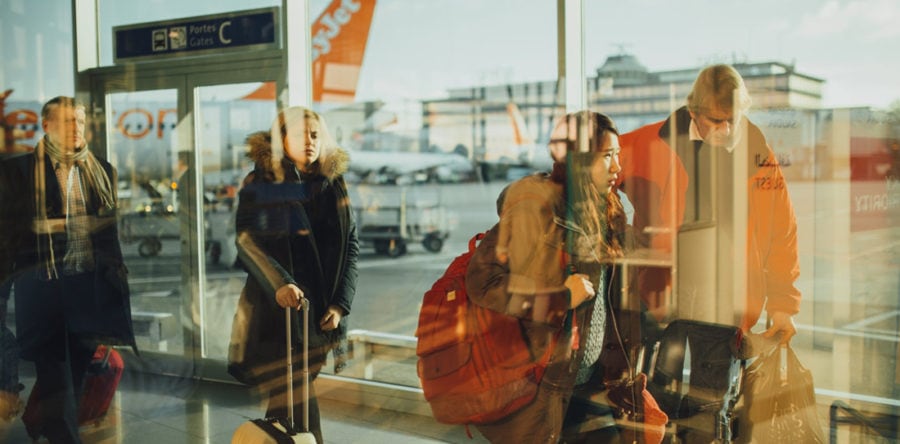
Under normal circumstances, you must lodge an application for a Transit Visa (Subclass 771) to allow you to transit through Australia and stay for up to 72 hours before catching your flight. However, you need not apply for 771 visa if you already hold a valid visa in Australia or are eligible to Transit Without a Visa (TWOV). Eligibility for Subclass 771 Visa You must leave Australia within 72 hours. You must meet health and character requirements You must have adequate health insurance. You must be outside Australia at the time of visa application and at the time of decision on your application . But nothing is normal about this COVID-19 situation! Due to travel restrictions, both international and domestic, in response to Covid-19 the Government requires that all passengers transiting through Australia must also seek a travel restriction exemption from the Commissioner of the ABF (Australian Border Force) to be allowed to do so. The application for such exemption must be made online through the COVID-19 (Novel Coronavirus) enquiry form on the Department’s website. You must fill the form with required details such as purpose of transiting through Australia, intended travel date, arrival and departure flight details, list of countries visited in last 14 days, your personal information and passport details. If you do not seek an exemption, you will not be allowed to transit through Australia. Further, if you are unable to depart from Australia on the same day (8 hours) as your arrival, irrespective of the Commissioner’s exemption, you may have to undergo isolation in the designated facilities of respective States or Territories to meet their isolation requirements. It is then the prerogative of respective States or Territories to consider granting exemption from their mandatory isolation requirements. Exemption for New Zealanders and Pacific Islanders New Zealanders and Pacific Islanders (citizen of a Pacific Island Forum country, Timor Leste citizen or resident of New Caledonia or French Polynesia) transiting through Australia DO NOT need to apply for a transit exemption if: Your transit though Australia is on your way to or from New Zealand or a Pacific Island Forum Country, and Your booked flight is departing from Australia within 72 hours of your arrival, and Your outbound connecting flight is departing from the same state or territory of Australia as your arrival flight. If your connecting flight requires you to be in Australia for more than 72 hours of your arrival, you must also apply for an exemption to the ABF Commissioner. This exemption application must be made online through the Department’s website. Thus, it is in your best interest to transit through Australia on the same day, holding a valid visa and a travel restriction exemption, wherever required. Also know that there is no visa application charge for lodging a 771 visa application. If you are seeking assistance to transit through Australia or need help in applying for travel restriction exemption, Contact Us today or call us on (02) 4626 100 to speak to one of our Registered Migration Agents who can help you with your situation.