


A new legislative instrument has been registered to repeal the Migration Agents Regulations 1998 and introduce consequential amendments to align existing migration legislation with the Migration Agents Regulations 2026. The Migration Legislation (Migration Agents) (Repeal and Consequential Amendments) Regulations 2026 support the transition to the new regulatory framework governing registered migration agents (RMAs). The amendments ensure consistency across migration legislation and remove outdated references to the repealed 1998 Regulations. Key amendments include: These changes streamline the legislative framework, modernise regulatory references, and ensure alignment with the updated migration agent regulatory scheme commencing 1 April 2026. Click here: Migration Legislation (Migration Agents) (Repeal and Consequential Amendments) Regulations 2026

Educational Testing Service (ETS) has introduced changes to the scoring system for the global TOEFL iBT test. These changes may affect applicants intending to rely on TOEFL results for Australian visa purposes. From 21 January 2026, the global TOEFL iBT test has transitioned from the traditional 0–30 score per section model to a 1–6 band score scale. These changes do not apply to the TOEFL iBT Australia test. The Australian version will continue to operate under the existing 0–120 total score scale. As of 21 January 2026, the TOEFL iBT Australia test is the only TOEFL test accepted for Department of Home Affairs visa purposes. Results from the global TOEFL iBT test types are not valid for Australian migration or visa applications. When booking the test, applicants must ensure they select the option labelled “TOEFL iBT for Australia.” The booking system may default to global TOEFL test versions, which do not meet Australian visa requirements. The confirmation screen should clearly indicate that the selected test is the TOEFL iBT Australia test. Careful attention during registration is essential to ensure compliance with English language requirements for visa applications. For more information Click here.

The South Australian Government has officially launched an updated version of their website, delivering a refreshed design, clearer content, and enhanced functionality. The updated website features a modern, mobile-friendly design that adapts seamlessly across phones, tablets, and desktop devices, ensuring a smooth user experience on any platform. Its improved navigation and cleaner layout reduce clutter and guide users directly to essential information, including migration pathways, eligibility requirements, and available services. In addition, the site is now available in 106 languages, making it more accessible and inclusive for a diverse audience. To visit the news website Click here.

LEGENDcom has released a Migration stack update, including revisions to internal policy and procedural instruction. As part of this update, the Child Safety & Wellbeing Policy Statement (SM-7088) has been introduced. Consequently, the following Policy and Procedural Instructions (PIs) have been removed, as their content has been consolidated into the new Child Safety & Wellbeing Policy Statement: The update ensures greater clarity and consistency in policy settings by centralising child safety and wellbeing guidance under one authoritative instruction.

A new legislative instrument has commenced, updating the temporary visa subclasses referenced under Public Interest Criteria (PIC) 4005 and 4007. The changes remove references to repealed visa subclasses and ensure the legislation reflects the current visa framework. The Migration (Temporary Visa Subclasses for PIC 4005 and 4007) Instrument 2026 commenced on 20 February 2026, replacing the previous instrument LIN 22/007. The new instrument removes Subclass 159 and Subclass 487 from the specified temporary visa subclasses for the purposes of subparagraphs 4005(2)(b)(ii) and 4007(1A)(b)(ii), as these visa subclasses have been repealed. Transitional provisions apply. The repealed instrument (LIN 22/007) will continue to apply to applications lodged under regulations 2.08 or 2.08B where the application was taken to have been made prior to the commencement of the new instrument. Click here: Migration (Temporary Visa Subclasses for PIC 4005 and 4007) Instrument 2026

The Department of Home Affairs has announced a free employer-focused webinar on the Skilled Refugee Labour Agreement Pilot. This webinar is designed for employers seeking access to an alternative skilled labour pathway that supports workforce shortages while enabling skilled refugees and their families to rebuild their lives in Australia. The webinar will take place on Thursday, 19 February 2026 from 11:00am to 12:00pm (AWST). The Pilot is delivered in collaboration with Talent Beyond Boundaries (TBB), which works closely with employers throughout the recruitment process. Participants will receive an overview of the Skilled Refugee Labour Agreement Pilot, learn about the support provided to employers by Talent Beyond Boundaries, hear testimonials from Pilot alumni and participating employers, and have the opportunity to ask questions of subject matter experts following the presentation. To register click here

Registered Migration Agents have been advised by OMARA of updates made by the Department’s Freedom of Information (FOI) section to its online resources. The revised FOI webpages have been updated to enhance clarity, improve navigation, and provide a more user-friendly experience for those seeking information or lodging requests. The full communication is provided below: “A fresh look for the Department’s access to information web pages In the Freedom of Information Section, we are committed to constantly refining our services to ensure an improved experience for you and your clients. Behind the scenes, we have been working on a number of initiatives to improve our processes to benefit clients needing to access their own personal information. Our external web pages have been redesigned to make the navigation experience more user-friendly, including a new landing page that is titled ‘Access to information’. The landing page separates personal and non-personal requests and clearly directs the user to the ‘Personal access request’ tab. Please follow the link here. To help us help you! We encourage you to use our online webform to submit your requests. • If you are requesting a visa file, this is typically more efficiently processed under Privacy Act provisions, and we have designed our new automation tools with this efficiency in mind. • If you are happy for your request to be processed under the Privacy Act, we encourage you to state this clearly in your requests to us.• To access improved automation to access information under the Privacy Act provisions you will need to ensure you do not specifically mention FOI or the Freedom of Information Act 1982 in your request. We will continue to ensure that if you indicate your preference is for us to manage your request under the FOI Act that these requests are registered and finalised as FOI requests. Whether you are requesting access to information under the FOI Act or Privacy Act we encourage you to use our online webform—it’s the fastest way to get started. If you have questions or feedback about these changes or how to frame your next request, our team is here to help. Just reach out to us. Email: request.personal.information@homeaffairs.gov.au”

The Administrative Review Tribunal and Other Legislation Amendment Act 2026 has received Royal Assent on 9 February 2026, formalising significant changes to the way the Administrative Review Tribunal (ART) conducts reviews. The amendments broaden the Administrative Review Tribunal’s (ART) ability to finalise matters without convening an oral hearing. Under the new framework, the Tribunal may determine a case based solely on written material where it considers a hearing unnecessary, reasonable in the circumstances, and where all parties have been provided with an adequate opportunity to present written submissions. Changes to the Migration Act introduce a mandatory “on the papers” review process for certain visa categories. This will apply to: Reviews involving permanent visas and protection visas will continue to follow existing procedures and are not impacted by these amendments. Click here: Administrative Review Tribunal and Other Legislation Amendment Act 2026

The Department of Home Affairs has advised that some information relating to English language testing — specifically One Skill Retake (OSR) and Single Section Retake (SSR) — is currently unavailable on its website and is being reinstated. In the interim, the following clarification has been provided. From 7 August 2025, the Department accepts IELTS and Michigan English Test (MET) results that include OSR or SSR for most Australian visa applications. The exception is the Subclass 482 (Temporary Skill Shortage) visa, which remains subject to a legislative instrument requiring test results to be obtained in a single sitting. Prior to this date (on or before 6 August 2025), IELTS OSR was accepted for visa purposes except for Subclass 476, 482 and 485 visas, as these subclasses were subject to legislative instruments mandating test scores from a single attempt. For clarity: The current legislative instruments — LIN 25/014 and LIN 25/016 — outline the applicable English language score requirements for tests taken both on or before 6 August 2025 and on or after 7 August 2025. The IELTS proficiency score thresholds themselves have not changed under the new instruments, and continuity has been maintained in this regard.
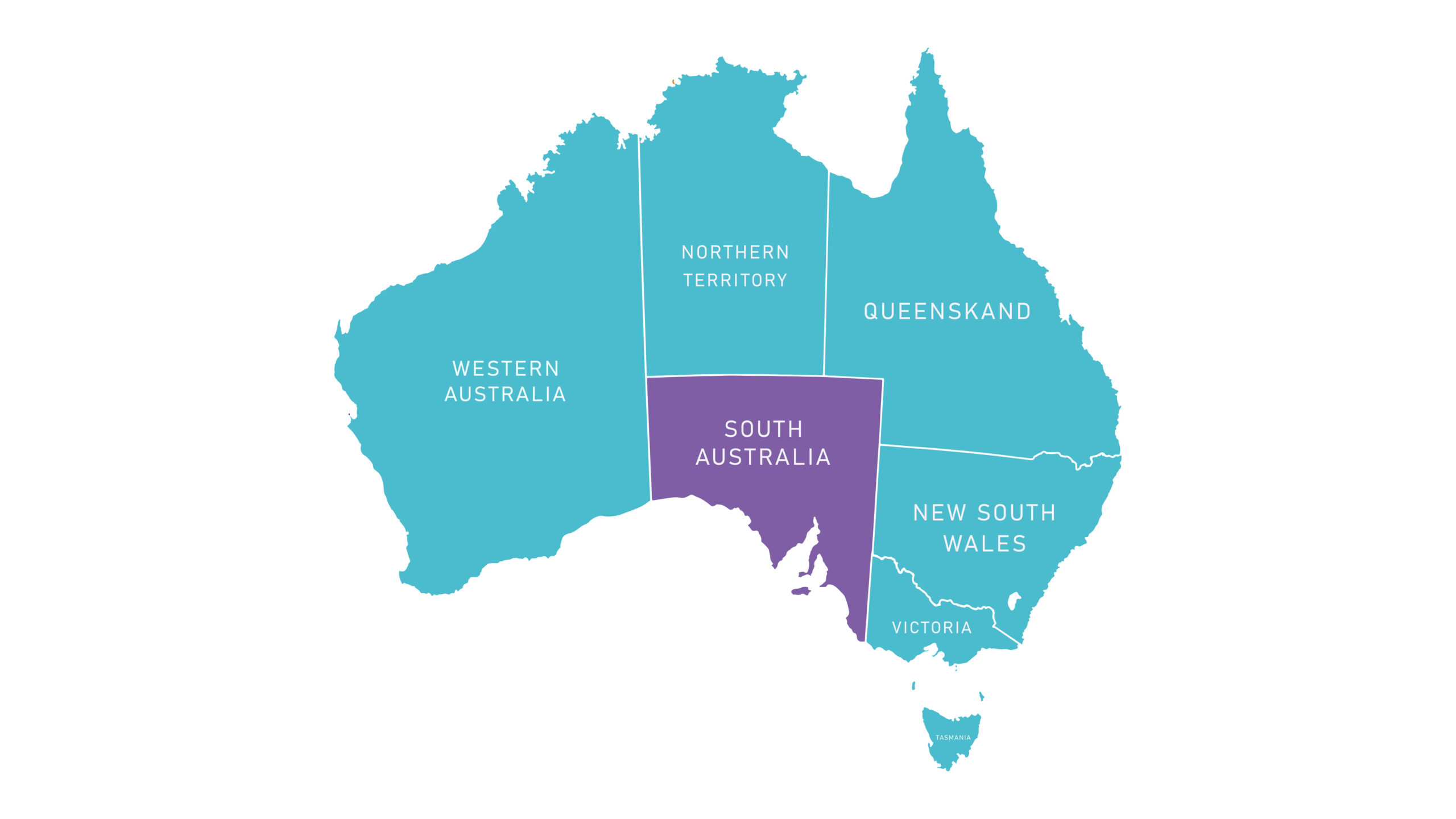
South Australia South Australia has released the results of its February 2026 General Skilled Migration invitation round under the 2025–26 Skilled and Business Migration program. Skilled and Business Migration continues to invite clients across the four streams of the program. In February 2026, the state issued a total of 364 nomination invitations, including: These invitations were distributed across a range of ANZSCO sub-major groups, reflecting current workforce demand across occupations, including health professionals, design and engineering professionals, ICT professionals, and more. Total invitations issued in the 2025–26 program year (to date): South Australia will continue to issue monthly invitation rounds, with the next round scheduled for early March 2026. Find more information on the South Australian government website. ACT – Canberra Matrix Invitation Round Update The Australian Capital Territory (ACT) has released the results of the Canberra Matrix invitation round held on 29 January 2026, under the 2025–26 skilled migration program. The Canberra Matrix is a points-based ranking system used by the ACT Government to select eligible candidates for state nomination for the Skilled Nominated (Subclass 190) and Skilled Work Regional (Subclass 491) visas. During this round, invitations were issued across a range of nomination pathways: Matrix nominations – Canberra residents: Matrix nominations – Overseas applicants (Critical Skill Occupations): The invitation process considers Matrix score ranking, occupation demand, and monthly allocation, with higher-ranked Matrix submissions receiving invitations. Invitations are not guaranteed solely by score and will not be issued if the applicant already has an active nomination application or has previously received ACT nomination. Submissions in critical sectors may be prioritised. As of this round, the 2025–26 nominal allocation for ACT nomination places remains: Click here: Canberra Matrix – Invitation Round Tasmania The Tasmanian Government has released its latest nomination invitation and allocation information as part of the 2025–26 skilled migration program. In the update published on 5 February 2026, Migration Tasmania invited a number of Registrations of Interest (ROIs) to apply for state nomination in the most recent draw: The update also shows that Tasmania currently has available places remaining under the 2025–26 nomination allocation: This weekly update helps applicants understand current invitation activity and allocation status. Click here: Tasmania – Processing Times and Invitations Issued